


Hayward, CA…Following California’s first statewide drop in unsheltered homelessness in more than 15 years — a 9% decline — Governor Gavin Newsom announced new accountability measures to speed up the adoption of CARE Court and awarded $291 million to expand supportive housing and behavioral health services statewide. The actions strengthen enforcement of the Community Assistance, Recovery, and Empowerment (CARE) Act and accelerate housing and treatment expansion through Proposition 1 and Homeless Housing, Assistance and Prevention (HHAP) funding.
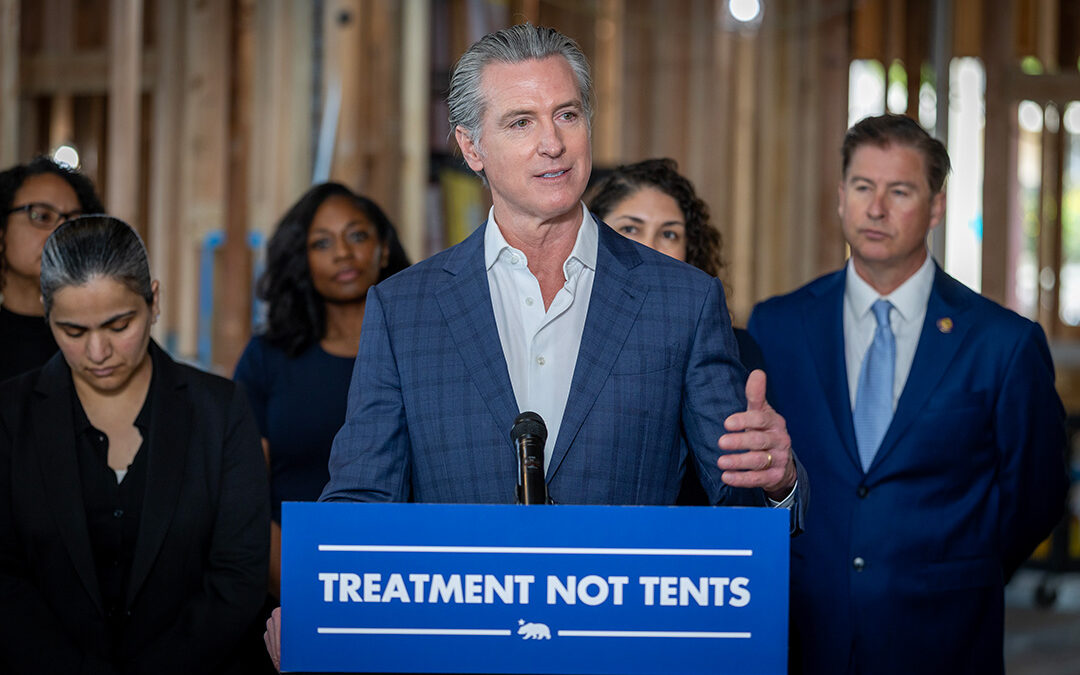
As part of today’s announcement, the Governor is designating ten communities that are leading the state in successful implementation of the CARE Act as “CARE Champions” and providing targeted state support for ten underperforming counties being placed on an “improvement” list to strengthen implementation and ensure communities see results to get chronically mentally ill individuals off California’s streets and into support and housing.
Care and accountability go hand in hand — full stop. Through CARE Court, we have seen inspirational stories of recovery and resilience, but many counties continue to lag behind their peers. Local leaders have a moral and legal obligation to deliver this transformational tool for those who need it most. We will not accept failure and excuses when lives are on the line.
Governor Gavin Newsom
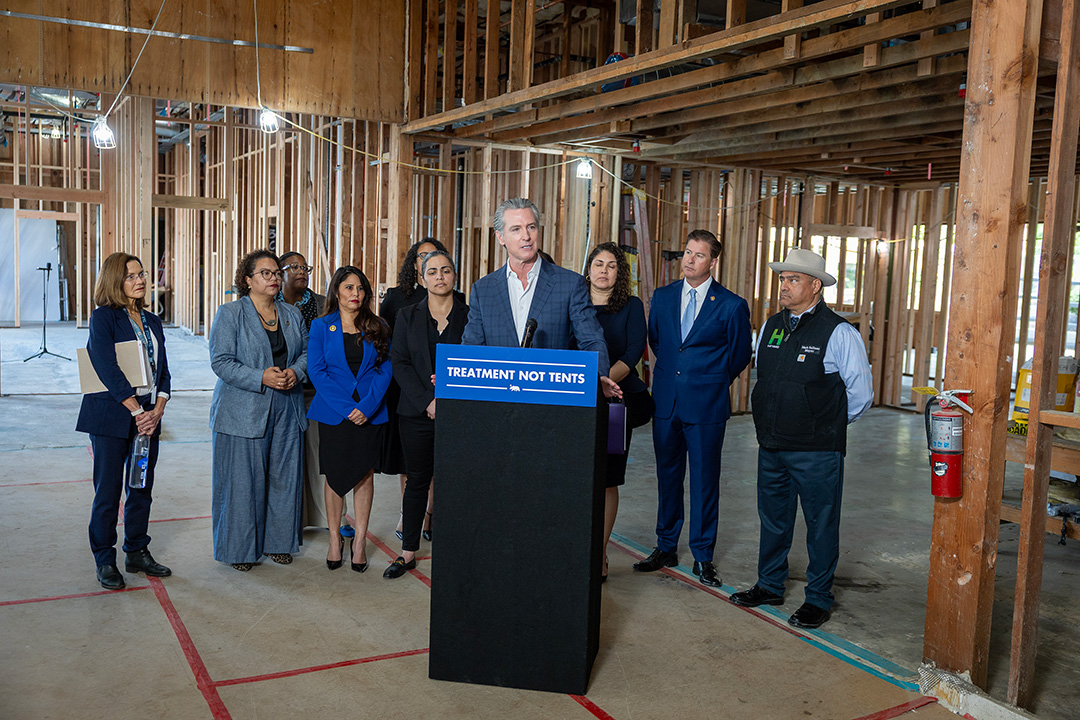
CARE: Treatment, not tents
The CARE Act is a cornerstone of the state’s work to modernize California’s behavioral health system and confront homelessness after decades of systemic failure.
CARE is a first-in-the-nation approach to empower individuals suffering from untreated or undertreated schizophrenia and other psychotic disorders to get the treatment and housing they need to recover and thrive. For many suffering from these illnesses, navigating the mental health system and maintaining a consistent treatment plan is difficult – whether finding and maintaining care or finding appropriate housing. Through CARE, individuals are connected with a team of providers and support, under the guidance of a civil court judge, to ensure those who need voluntary treatment do not have to go through the process on their own. While CARE Court is overseen by a civil court judge, it is not punitive, but instead structured for the participant’s success. The process begins with a petition to determine eligibility, which can be submitted by the individual, a family member, first responder, or mental health professional.
Counties delivering CARE
CARE Court programs began in eight participating counties in 2023 and were fully implemented in all 58 counties by December 2024. Since that time, more than 3,800 petitions have been submitted to courts. In addition, counties have reported more than 4,000 CARE diversions: cases where individuals considered for CARE have been reached and connected to services without need to engage the court. More than 1,851 people have continued through the CARE Court process.
“The CARE Act reflects California’s belief that compassion and accountability must go hand in hand,” said California Health and Human Services Agency Secretary Kim Johnson. “It offers people living with severe mental illness a real path to treatment and stability, while making clear that every county has a responsibility to deliver. When CARE is implemented effectively, lives change, and we are committed to ensuring that promise is realized statewide.”
CARE Champions
Every county is required to implement the CARE Act, and those that have leaned in to ensure that this valuable resource is available and prioritized are reporting success.
Today, Governor Newsom is awarding ten counties as “CARE Champions,” a designation that reflects they have successfully implemented CARE Court within their communities and have the highest rates of petitions on a per capita basis. Per capita rates are calculated using the 12 months of calendar year 2025, representing the first full year in which all 58 California counties were required to participate in the CARE Act, allowing for consistent statewide comparison. The state’s first cohort of “CARE Champions” are:
- Humboldt
- Tuolumne
- Marin
- Napa
- Merced
- Sutter
- Alameda
- Santa Barbara
- San Mateo
- Imperial
CARE ICU
The state continues to support communities experiencing challenges with CARE Act implementation by providing targeted technical support and training for county implementers. In contrast to the state’s “CARE Champions,” the Governor has identified 10 underperforming counties to receive additional support through the state’s CARE Improvement and Coordination Unit, and has designated these counties as “CARE ICU” (Improvement and Coordination Unit) Counties:
- Santa Clara County
- San Bernardino County
- Orange County
- Los Angeles County
- Kern County
- Riverside County
- Yolo County
- Monterey County
- Fresno County
- San Francisco County
Repairing California’s behavioral health system
In 2019, during his first State of the State, Governor Newsom announced that addressing the homelessness and mental health crises would become a new state priority — making him the first Governor to launch a statewide strategy to address these challenges. The Governor began repairing a system that had suffered from decades of neglect, beginning with then-Governor Reagan’s administration, when state hospitals were closed and no adequate alternative was provided, leaving people most in need of help to fall into the criminal justice system or homelessness. This created a generational impact. Today, across California, individuals with untreated psychosis are 10 times more likely to experience homelessness and 16 times more likely to be incarcerated.
Through the Governor’s work, California is repairing its behavioral health continuum – building new treatment facilities, expanding the workforce of care and establishing new programs to address unique needs and get people help and shelter, providing vital funding to communities, and creating stronger accountability measures and expectations to ensure everyone is doing their part.
More accountability
Californians can track how their community is addressing mental health, homelessness, and housing at accountability.ca.gov, which today was updated with new information about CARE Act implementation by county.
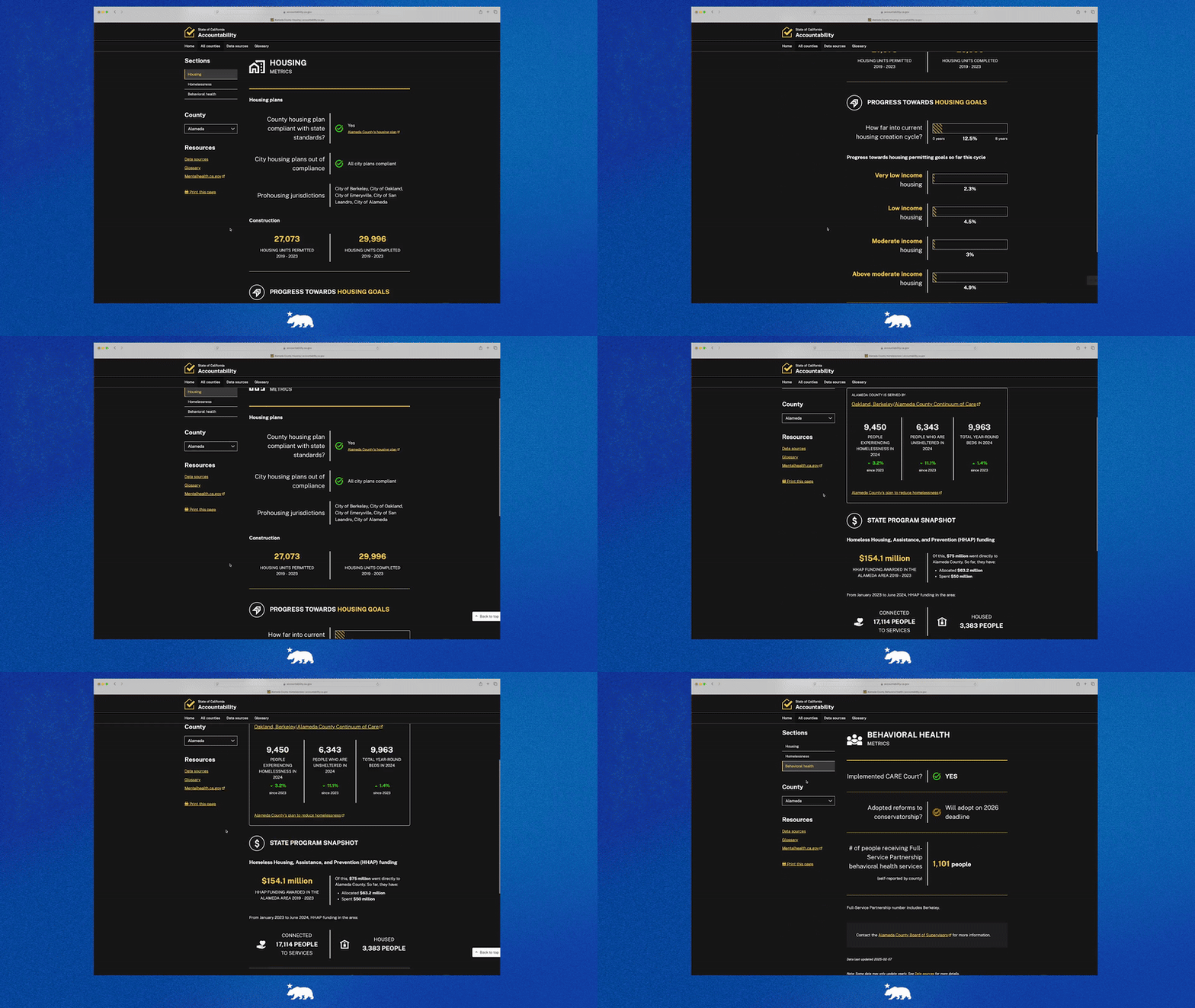
CARE Success in Alameda County
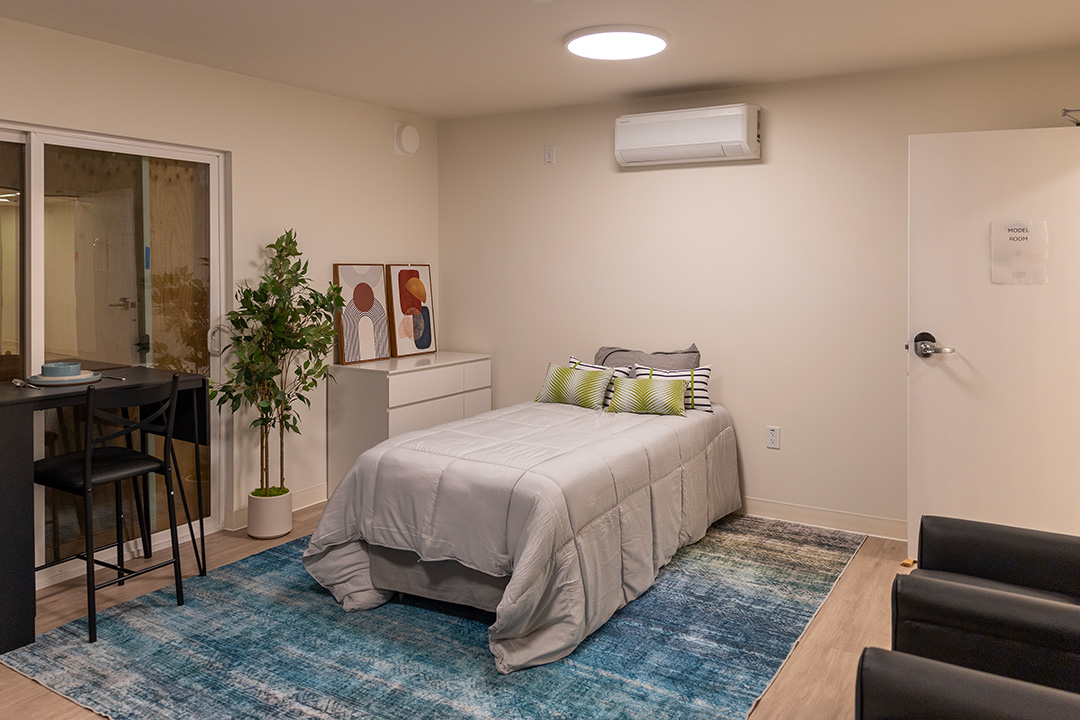
The Governor provided this CARE update in Hayward at the Bay Area Community Services (BACS) – Regis Village Campus, a service provider to CARE participants. With support from state funding, including infrastructure investments through the Behavioral Health Infrastructure Program, the Community Care Expansion and Proposition 1, BACS is providing permanent supportive housing and transitional housing with behavioral health support in Alameda County. The campus is currently expanding to provide additional on-site service, including a navigation center, medical respite, substance use residential and detox, a wellness center, sobering center, and CARE Act services office.
Alameda County is a shining example of a county that has worked to proactively implement the CARE Act. Under the leadership of Judge Sandra Bean, Alameda County has helped connect participants with comprehensive services such as those provided by BACS.
Judge Bean provided a recent update on a CARE Court participant and the wraparound services provided to her:
“Since she’s been in CARE court, there has been a dramatic turnaround, and she’s just really doing well, and it was so nice to hear her talk about how much she trusted and cared about her caseworker, and she felt really that her needs were met. And frankly, the one turnaround point, I think, for her was getting housing, and that individual was helping her get her Social Security, so she could have income, and they were applying for low-income housing, and so just having someone really advocate for her that she perceived as being as part of the court system just really, really changed this person’s life.”
Proposition 1 delivering support
The CARE Act adds to broader efforts to create a strong behavioral health system in California. Proposition 1, advanced by the Governor and approved by voters in 2024, helps local communities provide vital care and housing for those with mental health and substance use treatment needs. Prop 1 is transforming California’s behavioral health systems with a $6.4 billion Behavioral Health Bond for housing, services, and treatment for veterans and people experiencing homelessness – including $2.25 billion through Homekey+ to serve individuals with mental health or substance use challenges and veterans.
When fully awarded, funding from Proposition 1 bonds is also estimated to create 6,800 residential treatment beds and 26,700 outpatient treatment slots for behavioral health through the CA Department of Health Services.
As part of today’s announcement, Governor Newsom announced $131.8 million in Homekey+ awards for eight affordable housing communities to create 443 additional homes with on-site managers for Californians, including veterans, experiencing or at risk of homelessness and living with behavioral health challenges. The projects are located in the cities of Stockton and Santa Fe Springs and the counties of Contra Costa, Los Angeles, Tehama, and Yuba.
“Homekey+ and Proposition 1 programs continue to expand the availability of affordable homes and vital supportive services for Veterans and Californians who are experiencing homelessness and living with behavioral health challenges,” said Business, Consumer Services and Housing Agency Secretary Tomiquia Moss. “The supportive housing projects being awarded today will greatly improve lives and ensure that they have a home where they can thrive.”
“These new Homekey+ projects are helping turn the promise we make to our veterans into something tangible: a place to heal, rebuild, and belong,” said CalVet Secretary Lindsey Sin. “This work reflects California’s deep commitment to those who served, and the strength of our partnerships in delivering real solutions. We are proud to stand alongside the Department of Housing and Community Development and communities across the state in this work. Every new Homekey+ project brings us closer to a future where every veteran has the stability, dignity, and support they deserve.”
Building more housing and expanding services
Alameda is one of 20 regions today receiving Homeless Housing Assistance and Prevention (HHAP) Round 6 funding. HHAP aims to prevent and end homelessness through regional collaboration on local, targeted solutions, HHAP is a multi-year grant available to local communities to create permanent housing, sustain interim housing, and accelerate proven local interventions. The Newsom Administration has appropriated historic investments into the program, with nearly $5 billion appropriated through current and previous rounds of HHAP to support local jurisdictions in promoting housing stability and reducing homelessness.
Today’s announcement awards $159 million in HHAP Round 6 funding to 20 regions throughout the state. This builds on the $419 million awarded earlier this year to the Los Angeles, San Diego, and San Francisco regions – with a total of $578.9 million awarded this year alone as part of HHAP Round 6 and $181 million more to be awarded in the coming weeks.
HHAP Round 6 builds on existing accountability measures and responds to the Governor’s call to ensure funds have the greatest impact for Californians experiencing homelessness. These measures include requirements that grantees have and maintain a compliant housing element, and mechanisms to withhold funding from local governments that fail to demonstrate progress. For more information about how your community is performing in addressing housing, homelessness, and behavioral health care, visit accountablity.ca.gov.
There is a HHAP Round 7 totaling $500 million planned for FY 2026-27, contingent on further enhanced accountability and performance requirements. HHAP Round 7 will build accountability metrics further to ensure grantees make meaningful investments in housing solutions and adopt housing policies that will increase downstream housing supply, a critical tool in preventing future homelessness.
Reversing decades of inaction on homelessness
Governor Newsom is creating a structural and foundational model for America:
✅ Creating shelter and support — Providing funding and programs for local governments, coupled with strong accountability measures to ensure that each local government is doing its share to build housing, and create shelter and support, so that people living in encampments have a safe place to go. This week, through a $77 million investment from California’s cap and invest program, Los Angeles announced the expansion and redevelopment of the largest public housing project in the region, the Jordan Downs Project.
✅ Addressing mental health and its impact on homelessness — Ending a long-standing 7,000 behavioral health bed shortfall in California by rapidly expanding community treatment centers and permanent supportive housing units. In 2024, voters approved Governor Newsom’s Proposition 1 which is transforming California’s behavioral health systems. When fully awarded, funding from Proposition 1 bonds is estimated to create 6,800 residential treatment beds and 26,700 outpatient treatment slots for behavioral health care.
✅ Creating new pathways for those who need the most help — Updating conservatorship laws for the first time in 50 years to include people who are unable to provide for their personal safety or necessary medical care, in addition to food, clothing, or shelter, due to either severe substance use disorder or serious mental health illness. Creating a new CARE court system that creates court-administered plans for up to 24 months for people struggling with schizophrenia and other psychotic disorders, often with substance use challenges.
✅ Streamlining and prioritizing building of new housing — Governor Newsom made creating more housing a state priority for the first time in history. He has signed into law groundbreaking reforms to break down systemic barriers that have stood in the way of building the housing Californians need, including broad CEQA reforms.
✅ Removing dangerous encampments — Governor Newsom has set a strong expectation for all local governments to address encampments in their communities and help connect people with support. In 2024, Governor Newsom filed an amicus brief with the Supreme Court defending communities’ authority to clear encampments. After the Supreme Court affirmed local authority, Governor Newsom issued an executive order directing state entities and urging local governments to clear encampments and connect people with support, using a state-tested model that helps ensure encampments are addressed humanely and people are given adequate notice and support.
In 2025, just a year after he issued an executive order urging local governments to better address encampments, the Governor announced his SAFE Task Force to address encampments in California’s ten largest cities. In just a few months, the task force has addressed encampments in San Francisco, Los Angeles, Long Beach, Sacramento, and Fresno — connecting dozens of people with shelter. Since 2021, Caltrans has removed more than 19,000 encampments on state right-of-way and collected approximately 354,000 cubic yards of litter and debris.

Governor Newsom on New CARE Court Measures to Get More Chronically Mentally Ill Off Streets, Awards $291 Million in Funding added by admin on
View all posts by admin →
Stick it in your ass newsom.
Charlie Kirk- Empathy is for pussies.
F Jesus he was a pussy too.
Hes so full of shit, our homeless population has NOT declined. The only thing that declined was the Billions of taxpayer money the corrupt democrats and ‘friends’ stole from the homeless. 5 million here 25 million there.
Headline should read
“Governor throws more taxpayer money to corrupt friends”
Gawd…….he is soooooo hot.
He’ll fuck ya!
Gawd, one can only hope……………………………sigh
The republican with the eye patch… say goodbye to that asshole …
Gavin do you have pocket marks on your ass, just asking Adam Fairy on live oak ct..
Anti congratulations… asswipe of year again…